



Sexual trauma therapy helps survivors address distressing memories, rebuild safety, and work toward a life less shaped by what happened. For people seeking sexual abuse counseling in Florida, EMDR is an evidence-based PTSD treatment, while hypnotherapy has a more limited, potentially complementary role. Understanding that difference can help you choose care without pressure or promises of a quick cure. (ptsd.va.gov)
You do not have to decide on a treatment before reaching out. Start with what matters most: your safety, your preferences, and what you want support to change. A free consultation at Revibe Therapy in Winter Park or Orlando / Lake Nona is one way to begin that conversation.
What signs suggest sexual trauma therapy could help?
Sexual trauma therapy may help when reactions to abuse or assault interfere with sleep, relationships, concentration, or everyday activities. Sexual trauma symptoms can include intrusive memories, avoidance, feeling constantly alert, emotional numbness, and self-blame. These reactions deserve attention even if you have never received a diagnosis. (nimh.nih.gov)
Consider discussing experiences such as these with a qualified clinician:
- Unwanted reminders: nightmares, flashbacks, or strong physical reactions to reminders of what happened.
- Avoidance: staying away from places, conversations, or situations associated with the experience.
- Persistent alertness: startling easily, irritability, difficulty sleeping, or trouble concentrating.
- Changes in connection: withdrawal, emotional distance, or difficulty feeling positive emotions.
- Painful beliefs: persistent shame, guilt, or the feeling that you were responsible. (nimh.nih.gov)
PTSD from sexual trauma involves a specific pattern of symptoms lasting longer than one month and causing significant distress or impairment. Not everyone who experiences sexual violence develops PTSD, and seeking sexual trauma counseling does not require waiting a month or meeting diagnostic criteria. (nimh.nih.gov)
Repeated or prolonged trauma can also be associated with difficulties regulating emotions, a deeply negative self-image, and relationship problems. These features are sometimes described as complex PTSD; diagnostic systems differ in how they classify it. An assessment should explore your actual needs rather than assume that everyone with childhood abuse needs the same treatment. (ptsd.va.gov)
If intimacy, desire, or sexual functioning feel tied to past experiences, our sexual issues hypnotherapy and sex therapy in Orlando pages outline how those concerns can be addressed in a private, judgment-free setting.
How does EMDR for sexual trauma work?
Eye Movement Desensitization and Reprocessing, or EMDR, is a structured psychotherapy that helps people process traumatic experiences and reduce associated PTSD symptoms. During treatment, you briefly focus on aspects of a memory while following alternating visual, auditory, or tactile stimulation. EMDR for sexual trauma aims to change the distress linked to memories, not erase the past. (ptsd.va.gov)
Preparation comes before memory processing
EMDR begins with assessment, education, and preparation. Your therapist discusses symptoms and goals, explains the process, and helps you develop ways to manage distress. Memory processing is one part of treatment, not the entire experience. (ptsd.va.gov)
Ask how the therapist will recognize when you are overwhelmed, respond if you feel disconnected, and help you finish sessions feeling oriented. Agree on a signal for pausing. These questions are especially useful if previous therapy left you feeling pushed or unheard. Our guide to what happens in an EMDR session walks through that structure in plain language.
Processing does not require a detailed spoken account
EMDR for sexual abuse generally does not require describing every detail aloud. You still engage with aspects of the experience, including thoughts, emotions, and body sensations, while the therapist guides the process. The goal may include reducing distress and developing less self-blaming beliefs about what happened. (ptsd.va.gov)
Someone considering EMDR for sexual assault might identify a goal such as encountering reminders with less panic or feeling less responsible for the assault. Discuss your own priorities rather than adopting someone else’s recovery milestones. Ask how the clinician will track those goals alongside symptom changes.
EMDR is among the PTSD treatments most strongly recommended by the VA/DoD guideline. That supports considering it for sexual assault therapy when PTSD is present, but it does not establish a guaranteed result or fixed number of sessions for every survivor. (ptsd.va.gov)
Can hypnotherapy for sexual trauma help?
Hypnotherapy uses focused attention and therapeutic suggestions to influence experiences such as distress or discomfort. Hypnotherapy for sexual trauma may be discussed as an additional tool, but evidence is insufficient to recommend for or against hypnosis as a PTSD treatment. It should not be presented as equivalent to EMDR or as a proven stand-alone cure. (va.gov)
If you are considering hypnotherapy for sexual abuse, ask what specific symptom it would address and why the clinician recommends it. Also ask what happens if you find the experience uncomfortable or unhelpful. A clear explanation should distinguish possible symptom support from established treatment for PTSD. Our anxiety hypnotherapy page explains how focused attention work is used for stress and related patterns at Revibe.
Avoid promises to uncover hidden memories or verify whether abuse occurred. Hypnosis is not a reliable memory-recovery method and can increase confidence in inaccurate memories. Treatment should not depend on producing a complete narrative or accepting a practitioner’s interpretation of uncertain recollections. (hopkinsmedicine.org) For more on this boundary, see hypnosis and recovered memory.
Before agreeing, ask about the clinician’s mental health license, trauma training, and hypnosis training. Request an explanation of risks, alternatives, and how consent will be maintained throughout the session. You can decline hypnosis while continuing to seek other therapy for sexual trauma.
Comparing options without chasing a “best” treatment
The best therapy for sexual trauma is not determined by a catchy method name. When PTSD is present, evidence strongly supports trauma-focused treatments including EMDR, Cognitive Processing Therapy, and Prolonged Exposure. Your preferences and clinical needs should help guide the choice among appropriate options. (ptsd.va.gov)
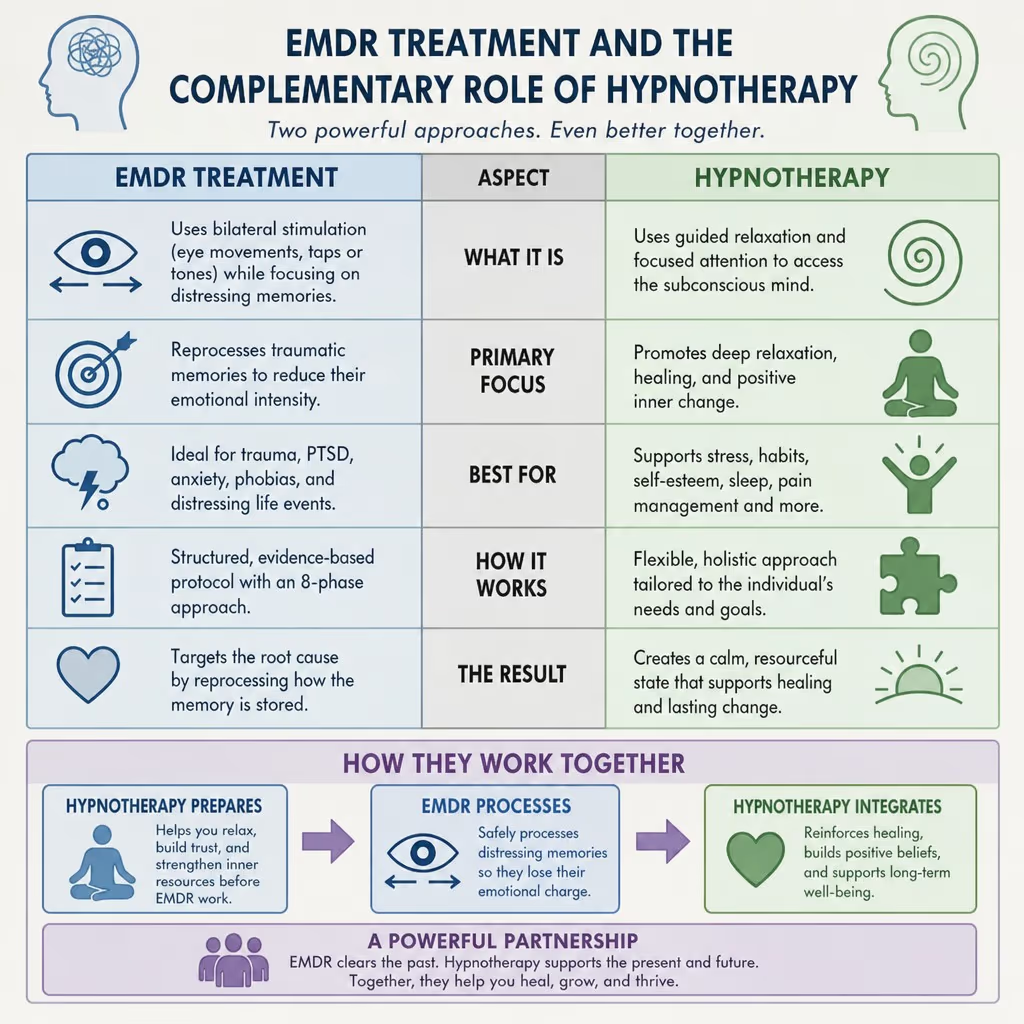
| Decision point | EMDR | Hypnotherapy |
|---|---|---|
| Evidence for PTSD | Strong guideline support | Insufficient evidence to recommend for or against |
| Main approach | Structured processing of trauma memories with alternating stimulation | Focused attention and therapeutic suggestion |
| What to clarify | Preparation, pacing, goals, and progress monitoring | Intended symptom target, risks, alternatives, and role alongside treatment |
These approaches have different evidence bases and should not be marketed as interchangeable. (ptsd.va.gov)
Ask about timing without expecting a deadline for healing from sexual trauma. EMDR commonly involves weekly appointments, but treatment length varies. If a practice offers intensive, multi-hour sessions, ask about suitability, breaks, follow-up, and the evidence behind its claims rather than assuming longer appointments mean better results. (ptsd.va.gov)
For a related overview of how hypnotherapy can sit alongside trauma care, see healing PTSD with hypnotherapy.
Working with Jose De La Cruz at Revibe Therapy
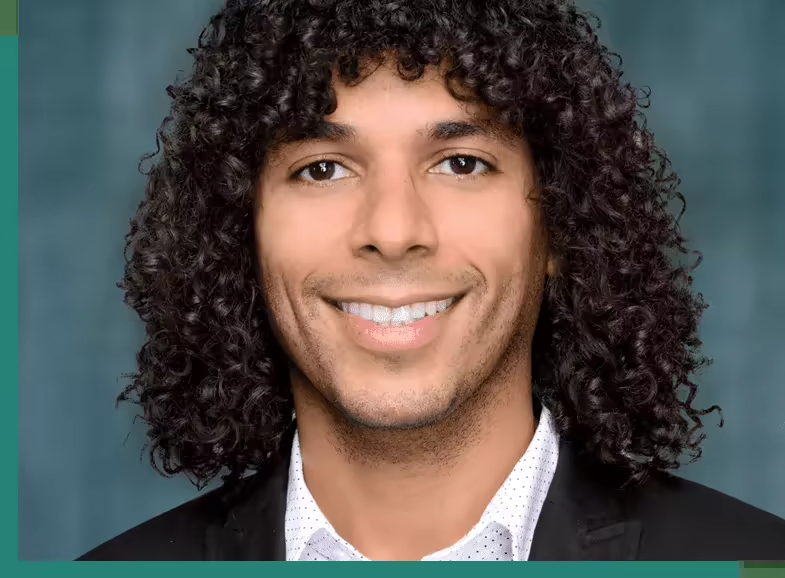
Jose De La Cruz, LCSW, CCH, CHT, FBT, EMDR-TC is the founder of Revibe Therapy and a licensed clinical social worker with training in clinical hypnotherapy and EMDR. He works with clients in Winter Park and Orlando / Lake Nona, and offers bilingual English and Spanish care when that fit matters.
In consultations about sexual trauma, Jose focuses on safety, pacing, and clear goals before any memory-focused work. You can ask how EMDR and hypnotherapy would be used in your specific case, what preparation looks like, and how progress will be reviewed. You do not need to share every detail in the first conversation to learn whether the approach fits.
Learn more about the full team on our Meet the Team page, or get started with a consultation.
Finding trauma-informed care in Florida
For sexual trauma therapy, Florida residents can start with the Florida Council Against Sexual Violence’s directory of certified sexual assault programs. The statewide helpline, 888-956-7273, connects callers with local services. Florida’s funded rape crisis services include crisis intervention, advocacy, referrals, counseling, therapy, hotlines, and support groups; ask your local center about availability. (floridahealth.gov)
When comparing trauma therapy in Florida, use a consultation to ask:
- Experience: “What experience do you have providing therapy for sexual abuse survivors?”
- Training: “What training and consultation support your use of EMDR or clinical hypnosis?”
- Consent: “Can I pause, decline an exercise, or postpone discussing details?”
- Fit: “Can you accommodate my language, disability access, cultural background, gender, or faith-related preferences?”
- Practicalities: “What are the fees, insurance arrangements, cancellation terms, and options if cost becomes a barrier?”
- Progress: “How will we decide whether this approach is helping or needs to change?”
Verify a prospective sexual abuse therapist’s professional credentials through Florida’s Department of Health verification system. For virtual appointments, confirm the provider is authorized to serve clients located in Florida; the state’s system also provides verification for registered out-of-state telehealth providers. (flhealthsource.gov)
Before choosing telehealth, consider whether you have a private space where you can speak freely. Ask how the therapist handles interruptions, technology failures, and urgent concerns during remote sessions. Bring up these practical needs before beginning memory-focused work.
At Revibe, you can also review EMDR therapy, sexual issues hypnotherapy, and contact options for Winter Park and Lake Nona before you decide.
Taking the first step without telling everything
If you are wondering how to heal from sexual trauma, your first task does not have to be recounting the experience. You might begin an inquiry with: “I am looking for sexual abuse therapy, but I am not ready to discuss details. Can you explain how an initial appointment works?”
Write down two or three priorities before the consultation: perhaps sleep, panic around reminders, boundaries, or feeling more connected to others. Ask the clinician to explain how treatment would address them. If a previous approach felt unhelpful, describe what did not work and what you want handled differently.
You deserve respectful care and an understandable treatment plan. Start with a qualified clinician or a local sexual assault center, ask direct questions, and keep your preferences part of the conversation. If you need immediate support finding Florida services, call 888-956-7273. (floridahealth.gov)
When you are ready to talk with Revibe Therapy, contact us or explore EMDR therapy and sexual issues hypnotherapy to see which path fits your goals.